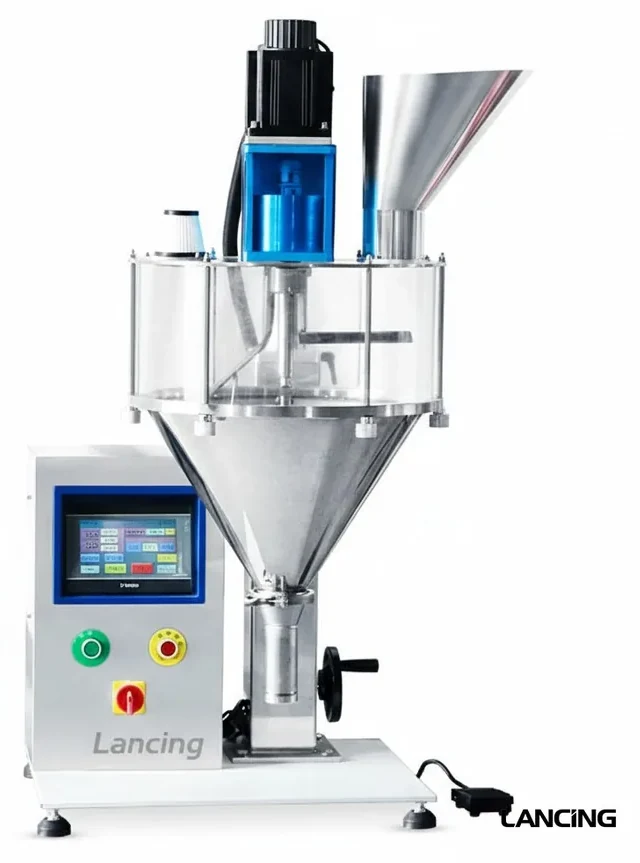
Compact route
Tabletop auger filler
Bench and tabletop auger filling for trials, short runs and smaller powder batches.
Small-dose tooling subject to trialOperator presentedSmall batch powder filling
View route Auger fillers for powders in jars, bottles, tubs, pouches and bags.
Compare the main options for powder filling, from compact bench units to automatic auger filling lines and VFFS powder bagging systems.
Bench and tabletop auger filling for trials, short runs and smaller powder batches.
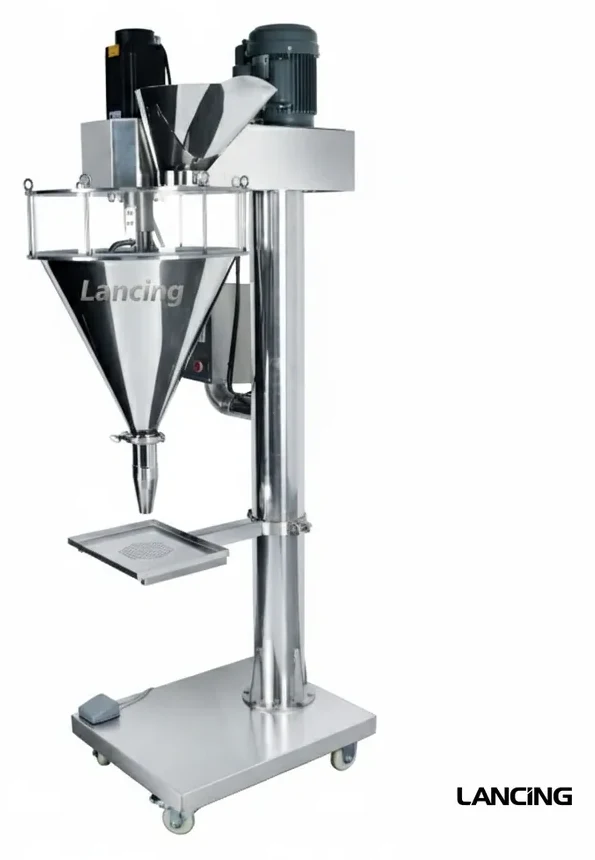
Semi-automatic auger dosing for jars, bottles, tubs, pouches and hand-presented packs.
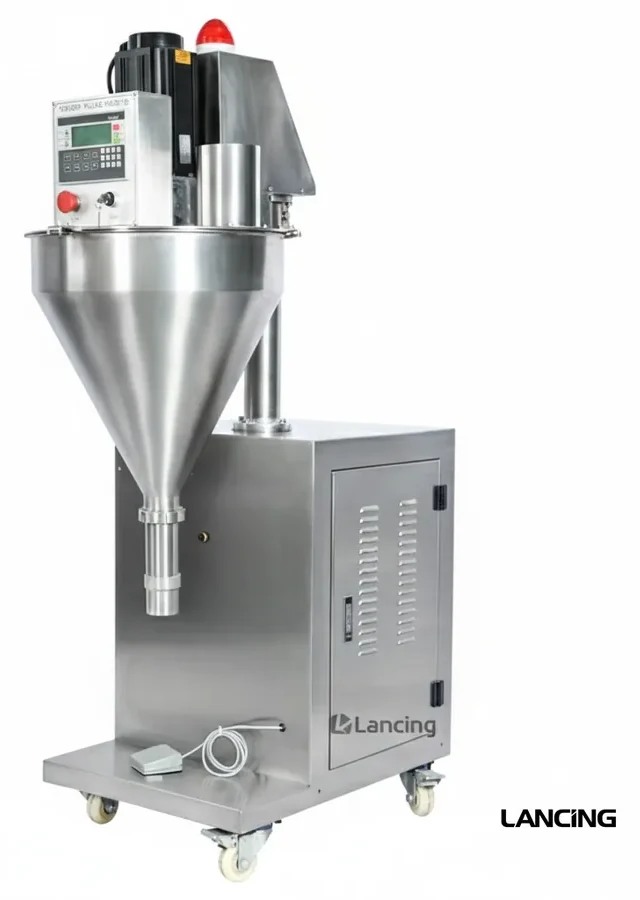
Automatic auger filling for production teams needing repeatable powder dosing and clean presentation.

Conveyor-fed auger filling with powder feeding, container handling and line integration support.
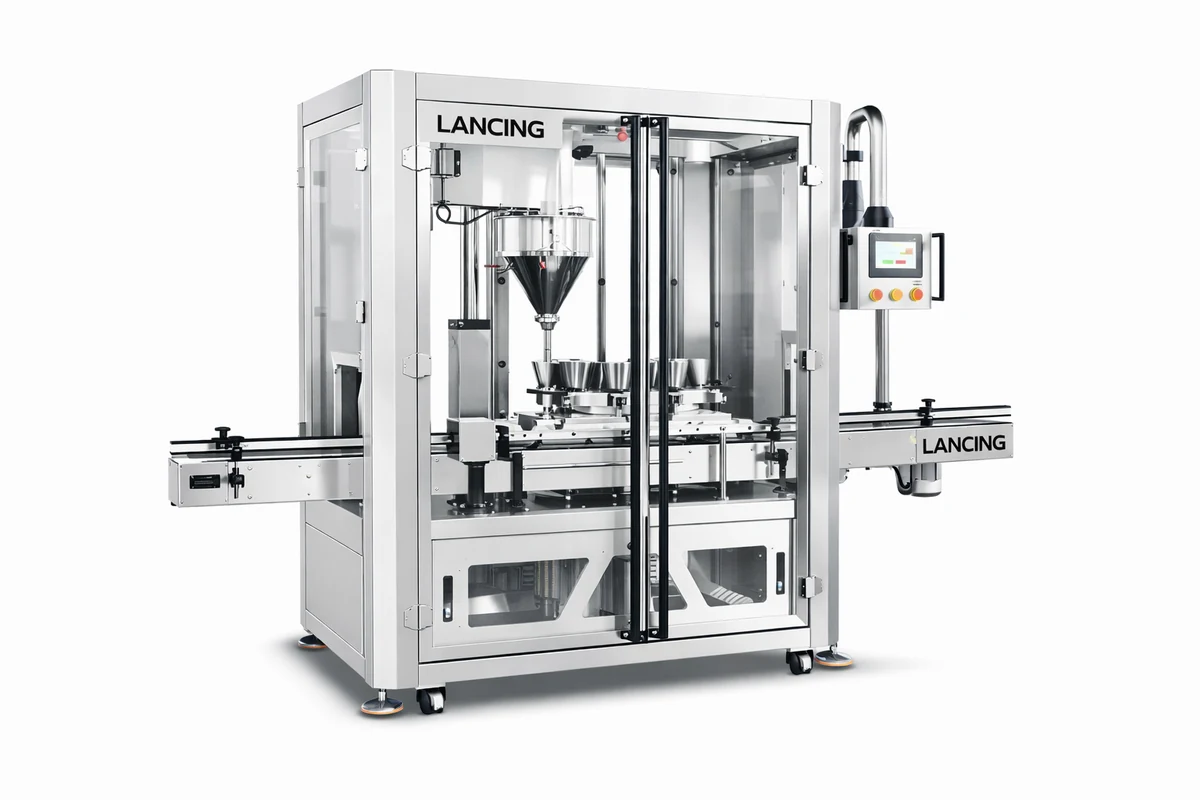
Guarded automatic rotary auger filling for higher-output powder and container projects.
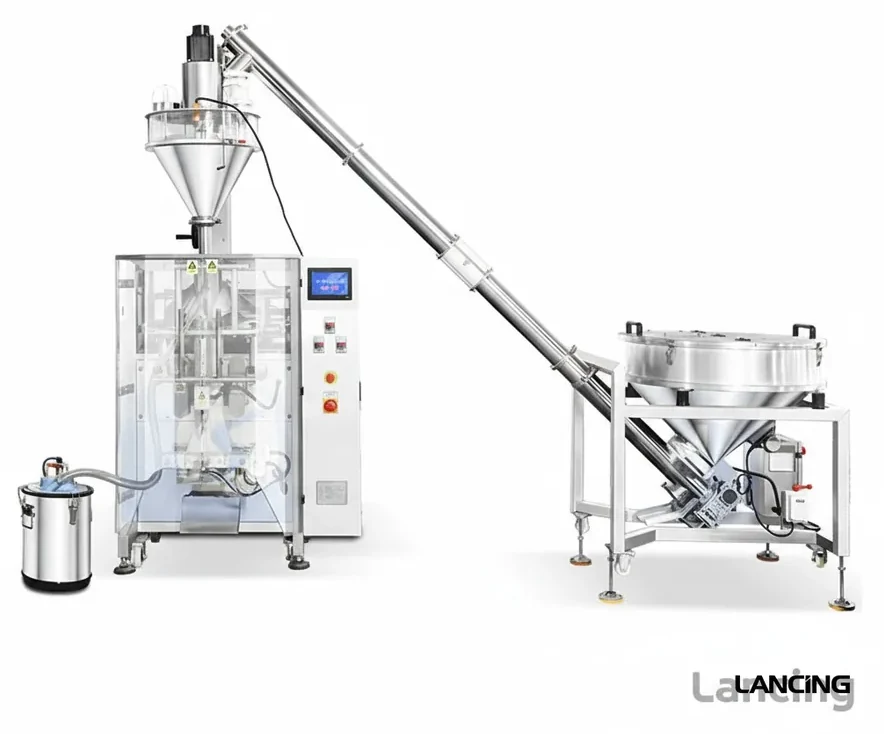
Auger dosing integrated with vertical form fill seal packaging and powder feed equipment.
VFFS and pouch filling routes where powder control, seal quality and finished pack handling matter.
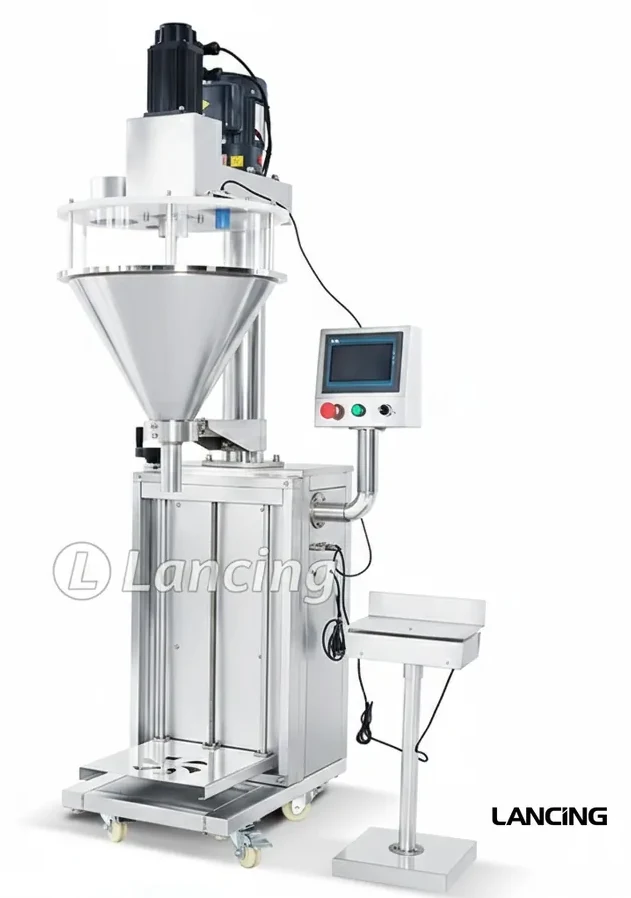
Auger filling combined with weighing control where the product needs careful dose confirmation.
We help UK manufacturers and contract packers choose auger filling machinery for powders and fine granules. Send your product, fill weight, pack type and output target, and we will suggest a practical machine route.
Send a product description and target pack. We will help narrow down the auger filler type before quoting.
A good auger filling project looks beyond the screw. Feeding, container control, dust management, sealing, capping, labelling and coding all affect output, accuracy and operator workload.
We can discuss a single filler or a complete powder filling route, depending on your output and site layout.
Start with your product and pack format, then choose the auger filler route that fits your output, accuracy target and available space.
Free-flowing, dusty, cohesive, aerated or settling products need different hopper and fill-head choices.
Jars, bottles, tubs, pouches and VFFS bags all change the handling and closing route.
Semi-automatic, compact inline and automatic line options should be compared against real shift targets.
Plan conveyors, capping, sealing, labelling, coding, checkweighing and aftercare early.
Use this section when you already know the style of filling machine you want: compact, automatic, VFFS bagging or a complete line.
Bench / compact
Compact auger filling for short runs, product trials, smaller batches and operator-presented jars, bottles, tubs or pouches.
See machine
Inline automation
Conveyor-fed auger filling routes for powders that need repeatable dosing, container handling and integration with closing or labelling.
See machine
Bagging / roll film
Auger dosing integrated with vertical form fill seal bagging for powder pouches, sachets and formed bags from roll film.
See machine
Line planning
Product feed, filling, settling, capping, sealing, labelling, coding and checking planned as one dry-product route.
See machineChoose by the powder you fill, then match the pack, fill weight and output to the right auger filler layout.
General powders
General powder dosing where flow, dust and fill consistency decide the auger route.
View application
Spices & seasonings
Auger filling routes for spices, seasonings, herbs and mixed dry ingredients.
View application
Sports nutrition
Dry-powder filling for sports nutrition, supplement tubs, pouches and jars.
View application
Bakery powders
Powder filling layouts for flour, starches, baking powders and dry mixes.
View applicationAuger fillers are normally used for powders and some fine granules where controlled screw dosing gives a more suitable route than a pump, cup filler or basic gravity feed.
Yes, but the container handling and discharge setup changes. Rigid containers, premade pouches, VFFS bags and sachets all need different presentation and sealing arrangements.
Send the product name, sample behaviour, fill weight range, pack dimensions, target output, accuracy requirement, available space and any sealing, capping, labelling or coding steps.
Send the powder or dry product, fill weight range, container or pouch details, target output and available space so the auger filler route can be scoped around the real process.
The machine name is only the starting point. A practical auger-filling specification begins with how the powder behaves, the weight that must be delivered, the opening it must pass through and the way the finished pack is closed.
An auger screw displaces a controlled volume of product as it turns. Servo dosing can control the screw movement accurately, but the filled weight still depends on consistent product presentation. Hopper shape, agitator action, head pressure, bulk density, aeration and bridging therefore belong in the same specification as the screw and nozzle.
For a useful trial, Lancing needs representative powder and the real jar, bottle, tub, pouch or bag. The trial should confirm stable feed, select the screw and outlet, record consecutive fills and show what happens after stops, hopper replenishment and normal settling.
These variables decide whether a compact filler, an automatic container line or an integrated bagging route is the sensible starting point.
| Selection variable | What to establish | Why it matters |
|---|---|---|
| Bulk density | Measure loose and settled values using a repeatable method. | The same auger movement can deliver a different weight when density changes. |
| Flowability | Observe free flow, rat-holing, bridging, clumping and the effect of gentle agitation. | It influences hopper geometry, agitator need and whether the screw remains consistently charged. |
| Dose range | Confirm the normal target, minimum and maximum SKU, plus permitted limits. | Wide ranges may require more than one auger, tube and filling-spout set. |
| Pack opening | Supply drawings and physical samples of the smallest and largest opening. | Nozzle size, filling height, pack support and dust containment depend on the real opening. |
| Output | State a sustained shift requirement rather than an isolated headline speed. | Feeding, filling, settling, sealing, capping and operator handling can each limit the line. |
| Cleaning | Define dry or wet methods, contact boundaries, changeover frequency and release checks. | Access, removable tooling, guards and product-contact construction must support the approved method. |
Lancing can review your sample behaviour, fill range, required output, cleaning method and line interfaces before the auger tooling and automation route are fixed.
The selection evidence above defines product behaviour, dose range, pack opening, output and cleaning. Ask each proposal to state the included tooling, powder feed, pack handling and downstream equipment against that same brief. Record any exclusions before comparing price.
If the production step is still operator-led, start with the semi-automatic auger filler route. If containers must move automatically through filling and closing, compare automatic auger filling machines. For roll-film bags, keep the auger specification tied to the VFFS auger filling process. For a wider installation, review complete auger filling lines before fixing the dosing head.
This keeps the enquiry focused on the piece of equipment that actually controls output, cleaning and operator workload.
Lancing can review the powder, container, pack opening, fill weight and line objective before confirming whether the project should start with a compact, semi-automatic, automatic or integrated auger filling route.
The final selection depends on the powder, target range, pack opening, operator tasks and line interfaces. Use the verified model pages and technical guides below to prepare a stronger enquiry.
Short-batch semi-automatic dosing with a 25 litre agitated hopper and separate weighing device.
Review LU-FM710A 50 litre servo platform with interchangeable tooling and weighing-feedback configurations.
Review LU-FM750FThree-head servo dosing for indexed bottles and integrated powder filling lines.
Review LU-FM4ADefine samples, measurement conditions, consecutive fills, restart checks and acceptance records.
Plan the evidenceControl replenishment, agitation, density change, bridging and refill effects.
Plan powder feedingPrepare access, utilities, extraction, controls, commissioning samples and training.
Check site readiness| Decision | Evidence | Best next page |
|---|---|---|
| Small batches and frequent changes | Operator-presented packs, flexible recipes and weigh checks. | LU-FM710 or LU-FM750F. |
| Indexed automatic bottles | Container stability, target output and downstream line sequence. | LU-FM4A automatic route. |
| Unstable weights or feed | Consecutive results marked with start, refill and restart conditions. | Troubleshooting guide. |
| Frequent product changes | Contact-part list, cleaning method and first-off release checks. | Cleaning and changeover guide. |
Include powder, fill weights, actual packs, output, cleaning and upstream/downstream requirements.
These answers help turn a broad powder-filling enquiry into a testable machine brief without choosing a model before the product and pack have been reviewed.
An auger-filler project should start with the powder, target fill range, production pack and required operating method. Those four items determine whether the first trial should use a tabletop, semi-automatic, weigh-assisted, automatic or integrated auger-filling route.
Use the auger filler question library to organise the early decisions, then send real samples through the existing enquiry route.
Direct link to answerReal product and pack samples reveal bulk density, flowability, dust behaviour, pack-opening limits and how the powder settles after filling. A product name alone cannot show whether the material bridges, floods, compacts or leaves residue on a rim or seal area.
The sample-trial guide explains what to send and which operating conditions should be reproduced.
Direct link to answerCompare quotations against the same powder, fill range, pack sizes, target output, operator role, upstream feed, downstream equipment and acceptance method. A lower headline machine price may exclude tooling, product feed, pack handling, guarding, controls interfaces or trial evidence needed by the real process.
The semi-automatic versus automatic comparison provides a practical scope checklist.
Direct link to answerLancing can use that evidence to identify the most appropriate auger-filling route and the tests needed before a final specification.
The latest Lancing model evidence adds two compact semi-automatic choices and a practical method for converting dose cycles into accepted finished-pack output. Each final configuration still depends on representative powder, production packs and an agreed trial.
A verified 6 L compact model route for small dry-powder doses and operator-presented packs.
View resourceA verified 35 L touchscreen model for development batches, short campaigns and product-matched tooling.
View resourceCalculate accepted finished packs from the complete cycle rather than the fill-head rate alone.
View resourceThe powder filling route library now connects machine, pack, product-behaviour and supplier-selection pages, while the auger filler question library covers tooling, accuracy, automation and line integration.
Start with the route that matches the real buyer task, then send Lancing the powder, fill range, pack samples, output target and any upstream or downstream process that must be included.
Lancing can use your product, packs and production sequence to identify the appropriate compact, weigh-assisted or automatic auger-filling route.
Buyers often search for an auger filler by machine type first, but the better shortlist usually comes from the filling principle, product risk and support requirement. These added guides help compare volume, weight, dust and maintenance factors before a quote is requested.
Compare auger, weighing, cup and checkweigh routes when product density or tolerance affects the filling method.
Compare dosing routes →Prepare SDS, dust, LEV and site-assessment information before specifying a filler for dusty powders.
Plan dust checks →Plan screw, tube, hopper, agitator, weighing and support requirements around the powders and changeovers.
Plan support route →A useful filling brief records powder behaviour, finished-pack checks and line output. Before selecting an auger filler, check whether the powder behaviour is stable, whether the finished pack needs weight verification and whether the chosen line can produce accepted packs consistently.
Record bulk density, flowability, bridging, dust and refill behaviour before asking for a machine recommendation.
Use the powder behaviour test →Decide whether bench weighing, inline checkweighing, reject handling or feedback is needed after auger filling.
Plan checkweighing →Machine price changes with product feed, tooling, extraction, weight control, closing and downstream integration.
Review cost factors →For many powder projects the best enquiry now includes more than the product name and target weight. Cleanability, allergen risk, weight verification and the checking method can all affect which auger filler route should be quoted.
Plan contact-part access, cleaning, allergens, dust and pack-closing needs for food and supplement powders.
Plan hygienic filling →Build a repeatable checking method for start-up, stable running, refill, restart and finished-pack acceptance.
Plan calibration checks →Separate fill-cycle speed from accepted finished-pack output when comparing line options.
Plan accepted output →A stronger auger filler enquiry should include more than the target fill weight. If the project needs documented acceptance, quality records or a site-ready layout, define those requirements before the machine route is fixed.
Use the new validation and IQ/OQ evidence guide to plan trial records, FAT/SAT checks and performance evidence. Use the utilities and site-services guide to check power, air, extraction, access and line signals.
Choosing an auger filler involves more than achieving a repeatable weight. A mixed powder can change composition during handling, and a stable filling run can still lose material through setup, residues or rejected closures. These are separate buyer decisions: establish what product quality must be preserved, then account for where each batch goes.
Review the route from mixing or delivery into the hopper, including transfer, agitation and end-of-batch discharge. Weight checks alone cannot confirm ingredient distribution.
Investigate segregation during auger fillingSeparate overfill in accepted packs from powder left in the machine, setup samples, spills and rejects before comparing machine economics.
Review powder giveaway and product lossInclude these acceptance requirements with the powder, fill range, pack samples and output target sent through the existing Lancing enquiry form.
Automatic auger filling is most useful when the required powder dose and pack can be handled consistently and manual presentation is constraining the complete process. It automates pack movement as well as dosing; the benefit should be demonstrated at the finished-pack handover, including feed replenishment and closing.
If an operator is waiting for powder to settle or for a variable dose to finish, adding automatic container transport may leave the same constraint in place. If filling is stable but presenting, moving and closing every pack consumes the cycle, automatic handling may address the main limitation. Record a complete run with each waiting step identified before comparing the routes.
A commanded auger movement and a measured fill weight are different records. Ask which result the proposed controls use and whether weight checks are sampled, continuous or used for feedback. Confirm the response to a missing container, a dose outside the agreed limits and a refill of the hopper. Specify how an affected pack is identified before it reaches closing.
Give each supplier the same pack range, powder condition, shift quantity and operator tasks. Include container supply, powder transfer, filling, dust management, closure and inspection in the comparison. A faster dosing head does not establish a higher finished output if another stage is waiting or rejecting packs.
Use the automatic auger filling route for conveyor-fed containers and the calibration and weight-verification guide to define the evidence. A trial should show both a stable dose and controlled pack movement before the automation scope is fixed.
Related guidance:
When comparing auger fillers, ask how the proposed system will handle the full batch from initial loading to the last saleable pack. The useful enquiry includes the amount of powder left in the hopper, the approach to an interrupted run and the way the next product is introduced. These are different questions from the nominal dose or the maximum number of packs per minute.
Prepare a simple batch reconciliation for the trial: powder supplied, acceptable filled packs, samples removed, rejects and material remaining in the machine. The purpose is to understand where the material goes and what the operating team must do at the end of the run. Agree which material can be recovered with the product owner; do not assume that all powder collected around a filling station may return to production.
Include short and long campaigns in the discussion. A compact operator-presented filler, an automatic rigid-pack line and a bagging system create different tasks for replenishment, empty-pack supply and end-of-batch clearance. Comparing those tasks against your actual shift pattern gives a more useful shortlist than choosing solely by the screw drive or the published fill range.
Send the batch-size range, sequence of products, pack mix and the time currently spent loading, clearing and cleaning. Ask for a demonstration that includes those activities, not only a continuous dosing run.