 Route
Route
How to choose an auger filler
A buyer guide to matching auger fillers to product behaviour, pack format and output.
View routePrepare the product, pack, output and site details needed for a more useful auger filler recommendation and quotation.
The goal is to avoid a vague request for “an auger filler” and instead describe the product, pack, output and site constraints clearly enough for a realistic shortlist.
Use the checklist below in emails or contact forms.
Available footprint, product feed height, utilities, access, cleaning method, operator positions and downstream equipment can all change the machine route.
A good line-layout note reduces assumptions and missing scope.
Name, sample availability, bulk density, flow behaviour, dust level, particle size, cleaning needs.
Target weight or volume, tolerance, number of SKUs, recipe changes, target output per minute or hour.
Jar, bottle, tub, pouch, sachet or bag dimensions, mouth size, closure or seal type, label and code needs.
Available footprint, utilities, access, operator positions, upstream product feed and downstream machinery.
Route
A buyer guide to matching auger fillers to product behaviour, pack format and output.
View route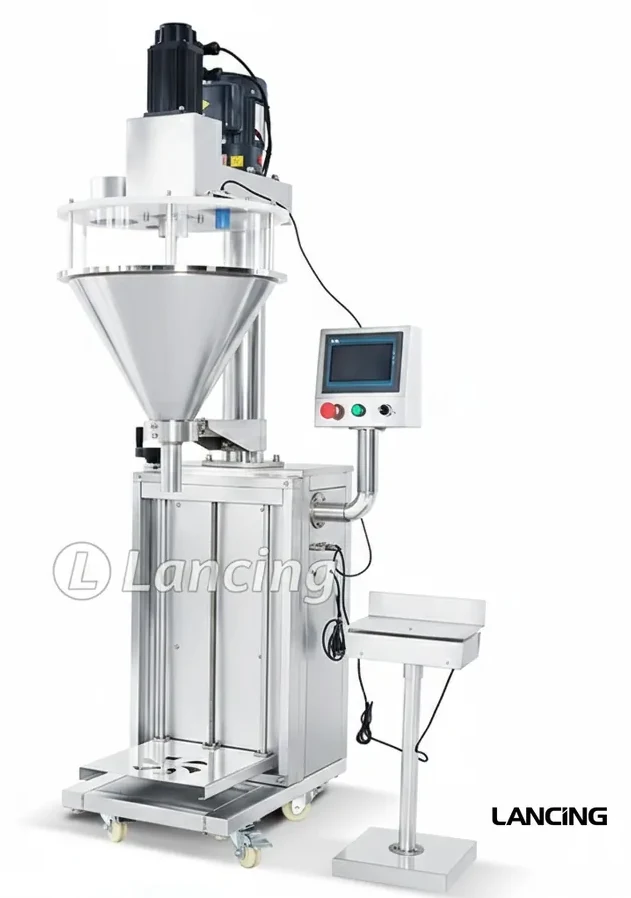 Route
Route
Compare auger filling with weigh-head, multihead and cup-dosing routes.
View route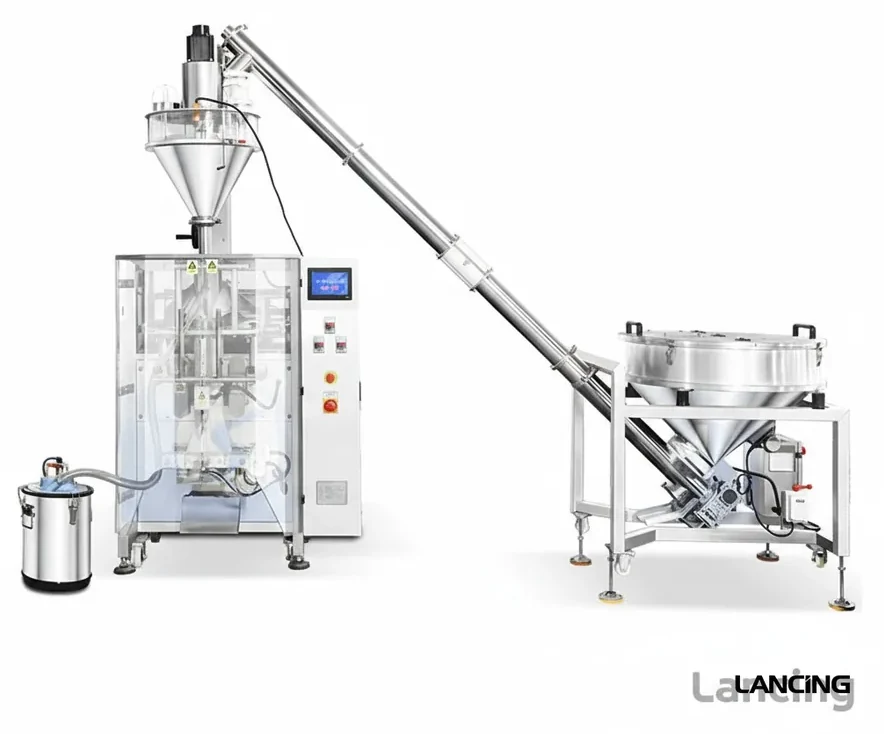 Route
Route
Plan hopper design, filling head, extraction and line layout around dusty powders.
View route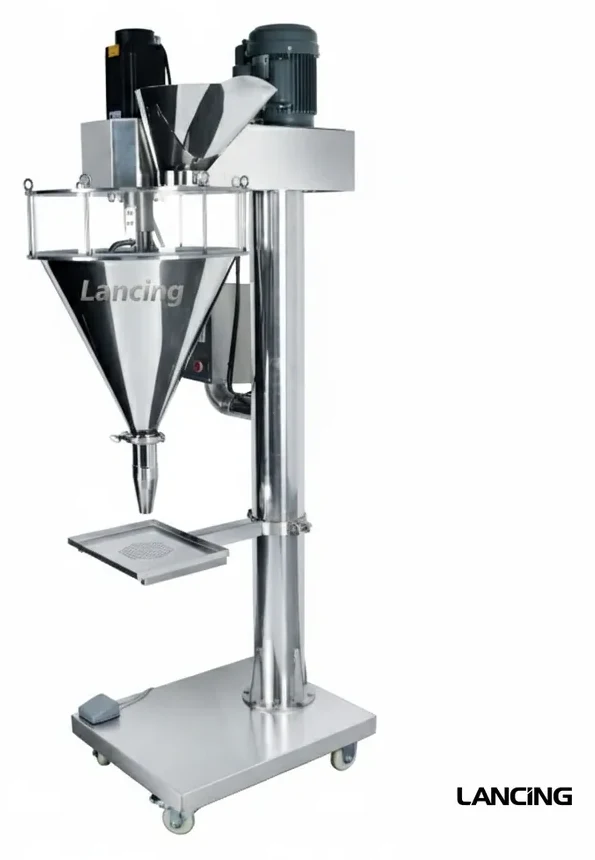 Bench / compact
Compact auger filling for short runs, product trials, smaller batches and operator-presented jars, bottles, tubs or pouches.
View route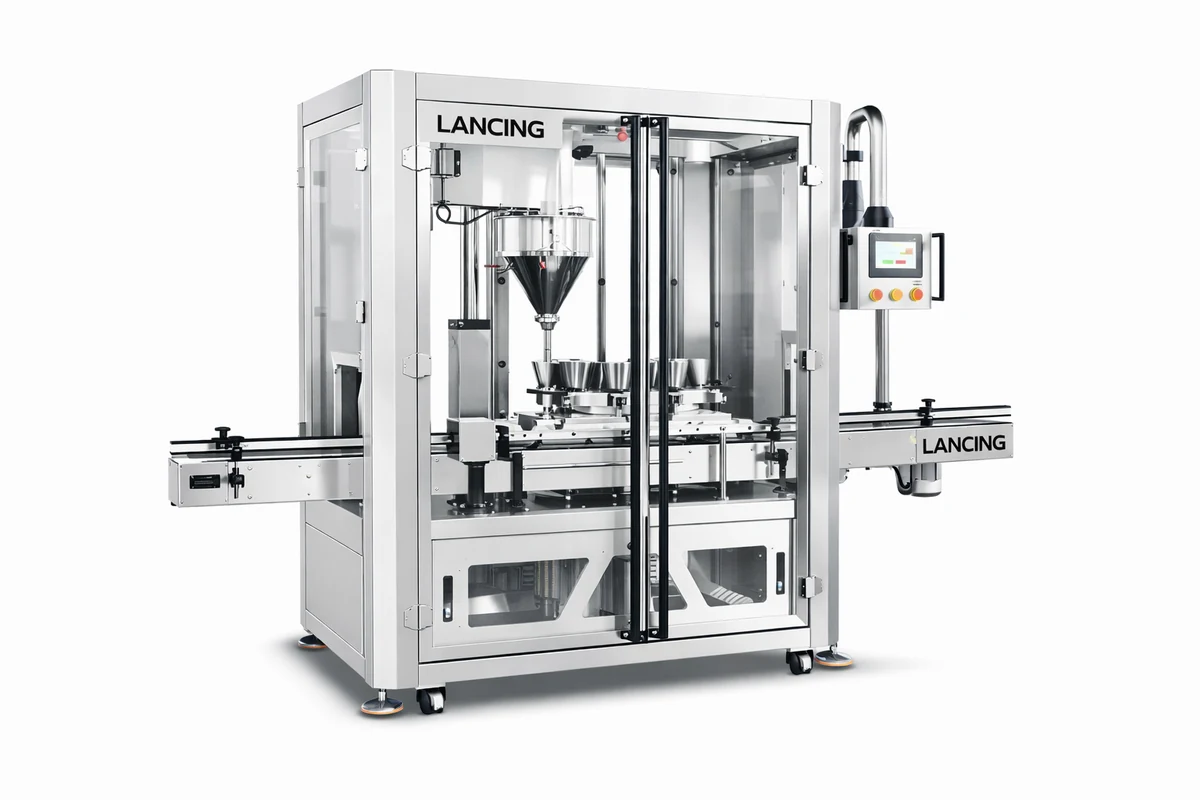 Inline automation
Conveyor-fed auger filling routes for powders that need repeatable dosing, container handling and integration with closing or labelling.
View route
Bagging / roll film
Auger dosing integrated with vertical form fill seal bagging for powder pouches, sachets and formed bags from roll film.
View route
Line planning
Product feed, filling, settling, capping, sealing, labelling, coding and checking planned as one dry-product route.
View routeAuger fillers are normally used for powders and some fine granules where controlled screw dosing gives a more suitable route than a pump, cup filler or basic gravity feed.
Yes, but the container handling and discharge setup changes. Rigid containers, premade pouches, VFFS bags and sachets all need different presentation and sealing arrangements.
Send the product name, sample behaviour, fill weight range, pack dimensions, target output, accuracy requirement, available space and any sealing, capping, labelling or coding steps.
Send the product, pack format, target fill weight and required output so Lancing can suggest the most suitable auger filler route.
A complete brief allows the model, tooling, pack handling, line interfaces and acceptance tests to be discussed without hiding important assumptions.
| Information group | Details to provide | What it decides |
|---|---|---|
| Product | Name or grade, safety information where relevant, particle description, bulk-density method and values, dust, aeration, bridging, clumping and sample availability. | Hopper, agitation, screw, outlet, containment and trial method. |
| Fill requirement | Normal target, minimum and maximum SKU, permitted limits, output and whether weight verification or rejection is required. | Tooling range, head count, controls, scale or checkweigher and practical cycle. |
| Pack | Drawings and samples, dimensions, opening, rigidity, headspace, closure, film, label and coding requirements. | Nozzle, pack support, filling height, conveyor handling and downstream machinery. |
| Cleaning and quality | Dry or wet method, changeover frequency, allergen or cross-contact controls, contact boundary, line clearance and required records. | Access, removable parts, construction detail, procedures and acceptance evidence. |
| Site and integration | Footprint, height, access, floor, utilities, extraction, operators, existing equipment and control interfaces. | General arrangement, services, line responsibility and installation scope. |
| Acceptance | Trial samples, run condition, measurement method, output basis, dust and seal or closure checks, changeover, alarms, restarts and documentation. | What must be demonstrated before the configuration is accepted. |
The required quantity depends on fill weight, setup losses, number of tooling options, smallest and largest packs, planned run length and whether cleaning or changeover is included. Send enough product and packs for stable feeding, adjustment and the agreed repeatability study rather than only a handful of samples.
Use the bulk-density and flowability method before sending the samples, and identify the representative batch.
It is highly useful because auger dosing is volumetric. Include the measurement method and, where possible, both loose and settled values rather than a number without context.
Yes. The extremes often decide the tooling range, filling height, guide adjustment, changeover parts and whether one machine configuration is practical.
State the target, permitted limits, whether the requirement is process control or legal metrology, and the sampling or rejection method expected in production.
Cleaning method, allergen or cross-contamination controls, product-contact boundaries and access requirements can change the hopper, tooling, guarding and line layout.
Agree the product and pack samples, trial duration, scale and sampling method, output conditions, dust observations, changeovers, alarms, restarts, rejects and the evidence that will be recorded.
Include the product, fill range, real packs, output, cleaning, site and acceptance information so Lancing can review the correct auger route.